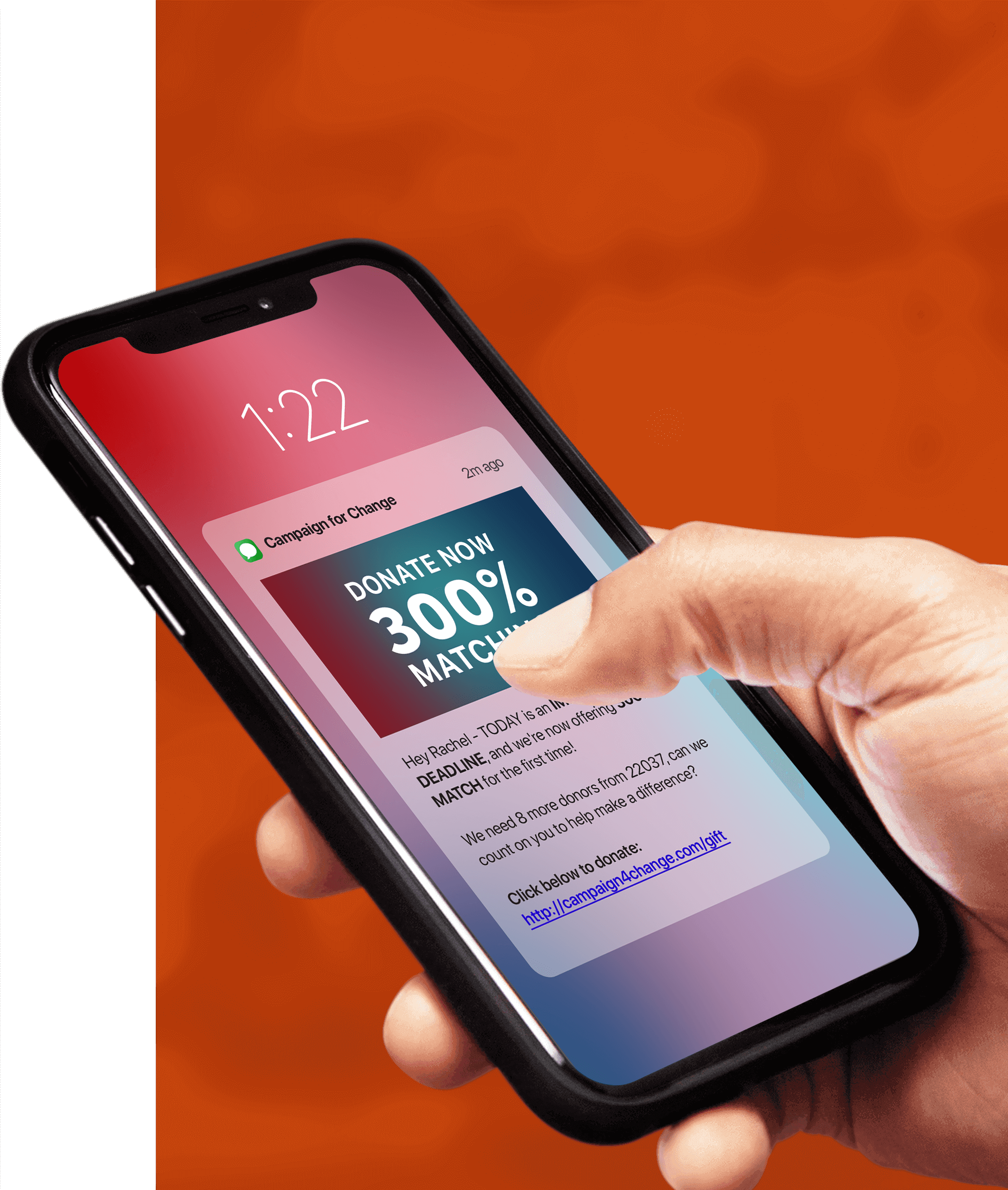
Direct mail has long been a crucial component of nonprofit multi-channel marketing strategies across sectors. From driving traffic online to sharing event invitations and donation thank-you letters, direct mail has historically played an important role in fundraising.
But in 2026, where does it stand? Is direct mail still an effective nonprofit marketing channel, or have other platforms like texting taken its place?
We’ll answer all your questions and provide insight into how you can maximize the results of your marketing efforts. Here’s what we’ll cover:
- How Effective is Direct Mail Marketing for Nonprofits?
- How Effective is Mobile Marketing?
- When Should You Send Direct Mail Instead of Texts?
- How to Combine Direct Mail and Text Marketing for Maximum Effectiveness
- Additional Ways to Integrate Text Messaging with Direct Mail

How Effective is Direct Mail Marketing for Nonprofits?
Direct mail remains a useful marketing channel for nonprofits, but it’s not nearly as effective as text messaging in today’s fundraising landscape.
Direct mail provides your supporters with a tangible item that links them to your organization, creating a personal connection. It also provides more flexibility in terms of content than some other channels—you can send longer messages, for example. Ultimately, using direct mail in your marketing strategy can be effective, but it’s more successful when combined with other channels, such as text messaging.
How Effective is Mobile Marketing?
When compared to direct mail, text messaging has many advantages that make it more effective for nonprofit marketing and fundraising. Just take a look at these powerful statistics from our latest Nonprofit Texting Insights Report:

- Fundraising texts saw an ROI of $4.38 for every dollar spent.
- The average text donation was $71.
- Nonprofits raised $3.03 for every dollar spent on engagement texts.
- Engagement text messages saw a 3.28% click-through rate.
Combine this data with text messages’ unparalleled 99% open rates and near-instant speed of delivery, and you’ll quickly see why SMS is such a powerful nonprofit marketing channel. Texts enable you to reach large segments of your audience with fast, personalized appeals that they’ll actually read.

When Should You Send Direct Mail Instead of Texts?
Texts beat direct mail in a lot of arenas, but there are times when direct mail may be better suited to your needs. Particularly, you might send physical letters when you have longer or more formal messages to convey.
Throughout different donor decision stages, this might include sending:
- Formal appeal letters
- Personalized impact reports
- Physical event invitations
- Detailed or handwritten thank-you letters
As a standalone, direct mail may not be an effective fundraising channel. When used as a part of a multichannel marketing strategy, however, it can be a powerful way to increase donations and maximize impact.
How to Combine Direct Mail and Text Marketing for Maximum Effectiveness
There are several ways to incorporate direct mail with other fundraising channels to increase its effectiveness. Combine direct mail with texting to create an integrated strategy that enhances donor engagement and boosts campaign results.
Here’s how you can get started:
1. Make Initial Contact via Direct Mail
Start by sending a direct mail piece that introduces your campaign or cause. This can include detailed information that might be too lengthy for a text message, such as stories about the impact of donations or detailed updates about your organization’s projects.
2. Follow Up with Text Messages
After sending physical mail, follow up with a text message. This text is a reminder of the direct mail piece and encourages recipients to take action, such as making a donation through a provided link or attending an event. Texts can be a quick nudge, making it easy for donors to remember your appeal and engage immediately.
3. Use Texting for Real-Time Updates
Send SMS messages to provide real-time or urgent updates that complement the information sent via direct mail. For instance, if your direct mail campaign is promoting a fundraising event, use texting to remind supporters of the event details, notify guests about any changes, and drive last-minute attendance.
For example, you might share the following text message to remind donors about your upcoming Summer Jam Fundraiser and simplify the registration process:

4. Solicit Feedback via Text
After sending a direct mail piece, use texting to gather feedback from recipients. This could be as simple as asking if they received your letter, what they thought about it, or if they have any questions. This not only increases engagement but also provides valuable data on the effectiveness of your direct mail content.
5. Text to Confirm Donations
For donors who have responded to a direct mail call to action by making a pledge or filling out a response form, send a text to confirm their donation and express gratitude. This immediate acknowledgment will reinforce their decision to support your cause and enhance donor satisfaction.

6. Link Texts to Online Content
In your text messages, include links to online content or digital platforms that relate to the content of the direct mail. This could be a video that expands on the stories shared in your letters, a signup page for an event, or a digital version of a report or newsletter highlighted in your letter.
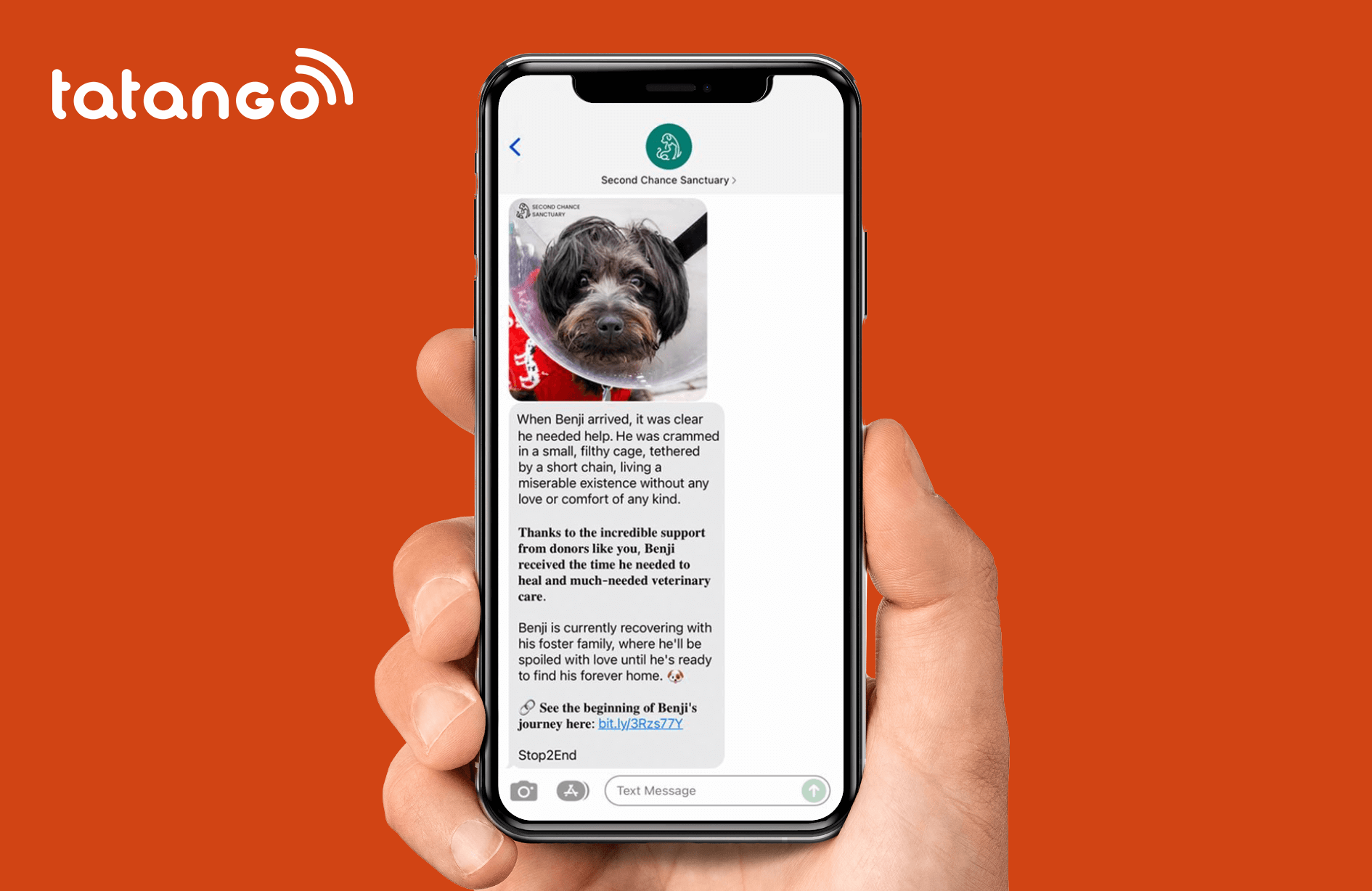
In the example below, a nonprofit animal shelter uses MMS (multimedia messaging) to highlight the story of rescue dog Benji. At the end of the message, the organization includes a shortened link that recipients can click to see Benji’s full journey.
7. Integrate Direct Mail Campaigns
Coordinate the timing of direct mail and text messages to create a rhythm in your communications. For example, you might send a series of direct mail pieces over several months, with texts sent between mail deliveries to keep the conversation going and maintain engagement.
8. Send Renewal Reminders via Text
Use a text message to remind donors when it’s time to renew their support if you have an annual campaign that you introduced through direct mail. A quick text is an effective reminder and prompts immediate action, especially if it includes a simple way to renew donations online (like a direct link to your donation page).
9. Target Your Audience Using Both Channels
Whether you’re using direct mail, texts, or another marketing channel, personalization and segmentation are key to targeting your audience. While direct mail is typically best utilized with older demographics, certain sectors have also seen success with younger generations like Millennials and Gen Z.
Beyond demographics, you might reach specific audiences by segmenting donors by:
- Geographical location
- Household income
- Donor status (active or dormant)
- Average donation amount
- Last donation date
- Donation channel preference (online, text message, phone, physical check)
Personalization, such as including a supporter’s first name and last donation amount in your message, makes donors feel valued as a vital part of your organization. For both of these channels, segmentation and personalization are essential for helping you increase engagement and donations.
Additional Ways to Integrate Text Messaging with Direct Mail
By using a texting service to integrate physical mailers with digital platforms, nonprofits can reach a wider audience with targeted communications. Here are a few ways to drive more action from a nonprofit direct mail piece to a digital platform:
- QR codes: Adding a QR code to a nonprofit direct mail piece is a quick and easy way to direct your audience online. Whether it leads to a mobile-responsive donation page, a video testimonial, or a letter from the executive director, nonprofits can create clear calls to action that move donors easily from a physical mailer to the digital world.
- Keywords: By including a keyword on a direct mail piece that allows users to opt in to your texting campaign, you can use personalized URLs to direct readers to a donation page auto-filled with their information. This creates a seamless donation process from a physical direct mailer to a text donation, driving higher engagement rates and improved response levels. Check that the text messaging platform your organization uses has this capability.
These methods are just the beginning. With a comprehensive, intuitive nonprofit texting solution like Tatango, you can access all sorts of innovative features designed to drive more donations. From AI-driven Power Segments to A/B split testing, you’ll have everything you need to inspire action.
Improving Your Nonprofit’s Multichannel Marketing Strategy
By thoughtfully integrating direct mail with texting, nonprofits can create a multi-dimensional engagement strategy that leverages the strengths of both tactile and immediate communication forms. If your nonprofit wants to engage donors with a multi-channel marketing strategy, contact Tatango today to learn more about how texting can work for your organization.
Want to read more insights first? Check out some of our latest blog posts about nonprofit text marketing:
- Key Takeaways from the 2025 Texting Insights Report. Our team recently analyzed thousands of nonprofit text messages to determine what strategies work best. Download the free report to find out.
- From Email to SMS: Building a Nonprofit Marketing Strategy. Zoom out on your marketing strategy with this beginner’s guide. Ensure all of your channels support each other, not just direct mail and text messaging.
- Handling TCPA Nonprofit Exemption: How to Stay SMS Compliant. To leverage text marketing, you must understand and comply with regulations like the TPCA. Learn the basics of compliance here.